Latest post

Best Practices QA Managers Should Implement When Reviewing Requirements
reviewing requirements
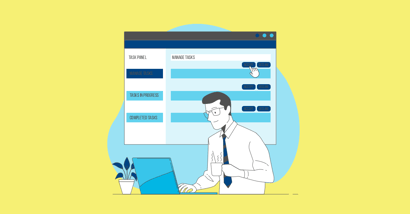
Successful projects are built on the foundation of precise requirements and the ability of teams to interpret, analyze, and review requirement documents. There are many customers who find it difficult to express their thoughts in words. Even if they are able to express themselves, there are many complexities that can arise due to the number of people involved, the skills of different team members, and the complexity of the domain. Without understanding the requirement documents (yes, there is a distinction between the requirements and the requirement documents), we would be on the path to making costly mistakes. Many projects suffered losses when the teams discovered the differences between intentions and implementation during the first demo.
The Risks of Performing No Testing or Minimal Testing
not testing software
Most businesses & startups test their ideas and products in a variety of ways. Some common methods include conducting market research, launching pilot projects or beta versions, and gathering feedback from potential customers. This is an effective strategy to refine products and ensure they are meeting the needs of their target market. Although getting the ideas tested by customers is a good strategy, getting the actual product feedback directly from them can be a recipe for disaster. The purpose of this article is to explain the importance of testing, as well as the risks associated with performing minimal or not testing your software.
Playwright vs Selenium: Key Differences, Pros & Cons, and When to Use Each
playwright vs selenium
When teams evaluate browser automation tools today, one of the most common comparisons is Playwright vs Selenium. Selenium has been the industry standard for more than a decade, powering countless test automation frameworks. But newer tools like Playwright are changing how teams approach end-to-end testing with faster execution, built-in parallelization, and modern browser APIs. So how do these tools actually compare? In this guide, we break down the key differences between Playwright and Selenium, including their architecture, features, performance, and real-world use cases.
What Bad Practices are Sinking your Software Quality?
what causes poor software quality
You’ll have a difficult time finding people and companies who disregard software quality. QA is fundamental to every product’s success. Even so, why do we see so many buggy products, delayed releases, and frustrated customers? There must be something fundamentally wrong with how we deliver software. We wanted to find out what causes poor software quality, among other issues like this. Because quality is multi-dimensional, every stakeholder has their own definition and understanding of quality. After discussing with multiple testers spread across product and service companies, one thing stood out — practices play an important factor in the overall software quality.
16 Advantages of Automation Testing (With Real Business Examples)
advantages of automation testing
What Are the Advantages of Automation Testing? The main advantages of automation testing include: Faster test execution Reduced human error Broader test coverage across devices and environments Lower long-term testing costs Continuous feedback through CI/CD integration Reliable regression testing Faster and safer software releases Together, these advantages allow engineering teams to scale quality without scaling headcount. Automation unlocks scale: It allows teams to test more, in less time, with fewer resources. The most significant ROI comes from consistency and speed: Faster feedback, fewer regressions, and more confident deployments add up quickly. Coverage is power: Broad, repeatable testing across devices and environments helps surface issues before users ever see them. QA can be proactive, not reactive: When automation handles the repetitive work, QA teams shift their focus to high-value, strategic testing.
Subscribe to our newsletter